


The manual vs automatic debate has always been a thing, whether you are a learner driver or an experienced driver considering making the switch.
However, in recent times, things have changed. That’s because around 92% of new cars ordered in 2026 are now automatics, while only 7.9% of new cars delivered in the first half of the year had a manual gearbox. Learners are following suit, with automatic tests making up 29.4% of all car driving tests in 2025/26, up from around 4% in 2007/08.
That doesn’t make the choice obvious. Whether you’re weighing up automatic vs manual for your first car, your next lesson or a fleet vehicle, the right answer depends on how you drive, what your licence covers and what you’re prepared to spend on running and maintenance.
Below, the Filter Services team is here to weigh in to compare how each transmission works, what they’re like to drive. Plus the long term considerations such as fuel efficiency, UK licence rules and what the evidence says about accident rates.
We’ll also look at something most guides skip: how your gearbox affects the filters your vehicle needs.
Manual vs Automatic Transmission: How Each One Works
Both types of gearbox do the same job. They transfer power from the engine to the wheels and change the gear ratio so the engine stays in a useful rev range as your speed changes. The difference is who makes the gear change and how.
Manual transmission
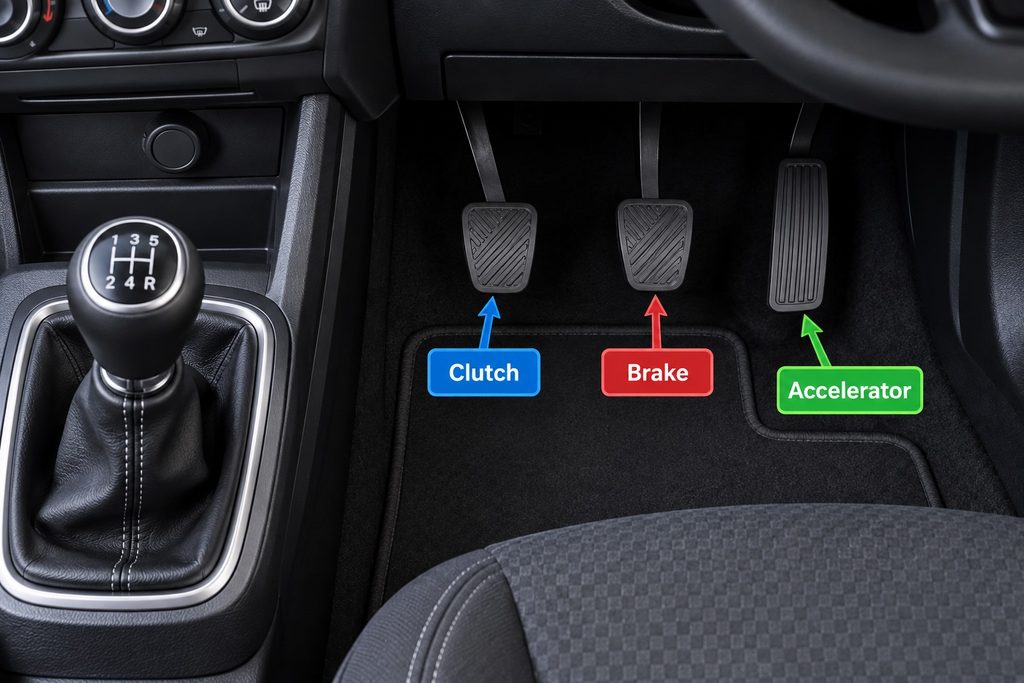
A manual gearbox uses a clutch pedal and a gear lever. Pressing the clutch disconnects the engine from the gearbox so you can select the next gear, then releasing it reconnects the drive. The design is mechanically simple, relies on a dry clutch plate and is lubricated by a sealed volume of gear oil.
Automatic transmission
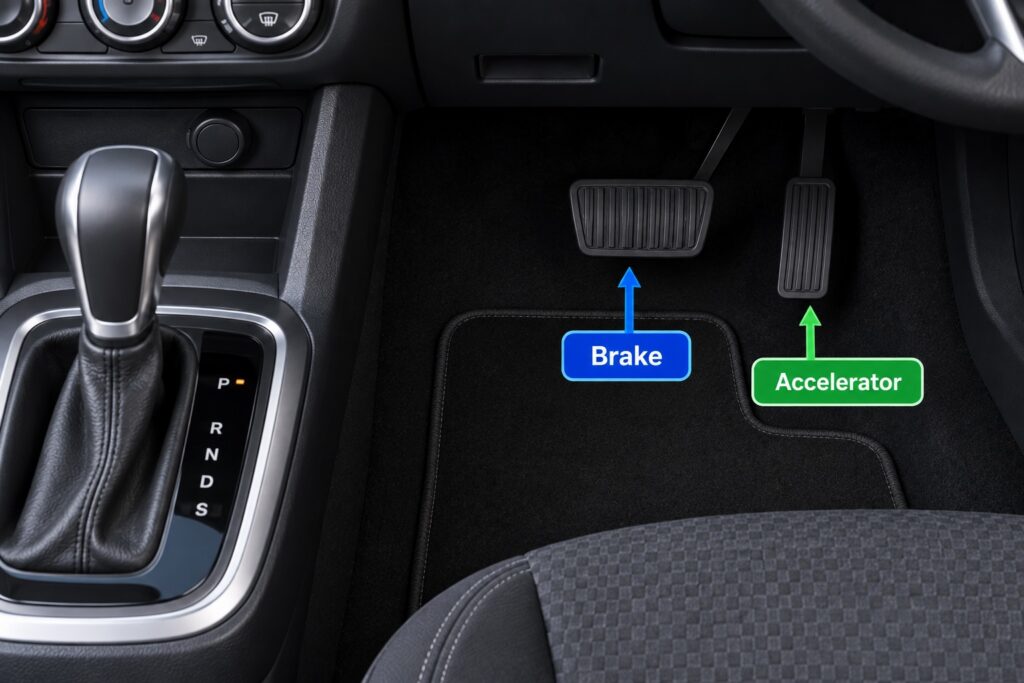
An automatic selects gears for you, so there is no clutch pedal. “Automatic” covers several designs:
- Torque converter: the traditional automatic, using transmission fluid to transfer drive. Modern versions often have eight or more gears.
- Dual-clutch (DCT or DSG): effectively two manual gearboxes working together under electronic control, giving very quick changes.
- CVT (continuously variable transmission): uses belts or pulleys rather than fixed gears, keeping the engine at its most efficient speed.
- Automated manual: a manual gearbox with the clutch and shifts operated by actuators.
Electric vehicles typically use a single-speed reduction gear, so they are classed as automatics for licensing purposes too. Hybrids almost always pair their engine with an automatic or e-CVT.
Driving Automatic vs Manual: The Day-to-Day Experience

For most drivers, the biggest difference between driving automatic vs manual is workload. An automatic removes clutch control, stalling and finding the biting point on hill starts. That frees up attention for the road, which is why automatics are popular with learners, older drivers and anyone who spends a lot of time in stop-start traffic.
A manual gives you more direct control. You choose when to change gear, hold a lower gear for engine braking on long descents and decide exactly how the car responds when overtaking or towing. Many enthusiasts also simply find a manual more engaging to drive.
Where an automatic tends to suit better:
- Town and city driving with frequent stops
- Long motorway commutes in congested traffic
- Drivers with mobility or joint problems in the left leg
- Anyone planning to switch to a hybrid or electric car
Where a manual tends to suit better:
- Drivers who want the widest choice of used and classic cars
- Rural driving where gear selection on hills and bends matters
- Some vans and older commercial vehicles that are still manual only
- Drivers who want to keep a full licence entitlement (more on that below)
If you’re planning longer journeys, our motorway driving guide covers lane discipline and fatigue whichever gearbox you choose.
Manual vs Automatic Fuel Efficiency
On manual vs automatic fuel efficiency, the old rule of thumb no longer holds. Older automatics used more fuel because they had only three or four gears and torque converters that slipped, wasting energy as heat. That is where the reputation for poor economy came from.
Modern automatics have closed the gap and often overtaken manuals. Eight, nine and ten-speed gearboxes, dual-clutch units and CVTs keep the engine in its most efficient rev range almost all the time and torque converters now lock up at cruising speed to cut losses.
On official figures, many automatics now match or beat the equivalent manual model.
The driver still matters. A skilled manual driver who changes up early and reads the road well can use less fuel than an automatic in some conditions. But most drivers do not drive that way consistently, so the automatic’s software usually wins in real-world use.
Whichever gearbox you choose, the basics have a bigger impact on economy than the transmission itself: smooth acceleration, correct tyre pressures, a clean air filter and regular servicing. Our guide on how to drive economically covers the habits that save the most fuel.
Manual vs Automatic Licence UK: What You Can Drive
The licence rules are one of the most important differences in the manual vs automatic decision and they are easy to overlook when you book your test.
- Pass in a manual: you get a full category B licence covering both manual and automatic cars.
- Pass in an automatic: you get a category B licence with restriction code 78, which limits you to vehicles with automatic transmission. This applies whether you take your test in a petrol, diesel, hybrid or electric car.
Driving a manual on a code 78 licence means you are driving otherwise than in accordance with your licence, which can also invalidate your insurance.
To remove code 78, you need to pass a practical driving test in a manual car. In the meantime you can practise in a manual as a learner, with L plates and a supervising driver aged 21 or over who has held a full manual licence for at least three years. You can still drive automatics unsupervised throughout.
The number of drivers choosing the automatic route is growing quickly. The AA reports that automatic tests reached a record share in 2025/26, with an automatic pass rate of 44.6%. The trade-off is flexibility: a code 78 licence rules out most classic cars and some vans and can limit your choice of hire and pool vehicles at work.
Car Accident Rate Manual vs Automatic: Which Is Safer?
There is no strong evidence that either gearbox is safer. Research on the car accident rate for manual vs automatic cars is limited and the studies that exist struggle to separate the effect of the transmission from the driver, the vehicle and the road.
A few findings are worth knowing:
- Switching gearbox types: a study of first-year drivers in Victoria, Australia found weak evidence of a higher accident risk among drivers who passed their test in an automatic and then drove a manual. Unfamiliarity, rather than the gearbox itself, appears to be the issue.
- Injury severity: a study of crash data from Ghana between 2019 and 2022 linked manual vehicles with a higher risk of serious and fatal injuries, although local vehicle age and road conditions are likely factors.
- Insurer view: in the US, State Farm has said it sees no safety advantage for either automatic or manual cars.
The argument for automatics is that drivers have one less task, which leaves more attention for hazards. The argument for manuals is that drivers stay more engaged and are less tempted by distractions. In practice, driver behaviour, experience and vehicle condition have a far bigger influence on accident risk. Distraction remains one of the biggest risks on UK roads, which is why the mobile phone driving laws carry such heavy penalties.
Automatic vs Manual: Costs and Key Differences
Automatics usually cost more to buy, insure and repair, while modern versions often cost the same or less to fuel. Insurance quotes vary by model, but one comparison found an automatic Mercedes-Benz C-Class averaged £781 to insure against £735 for the manual.
Fuel is rarely the deciding cost in the automatic vs manual comparison, as modern automatics match or beat manuals on most models. The bigger differences show up in maintenance, repairs and how long the car will suit you.
Gearbox maintenance: A manual gearbox runs in a sealed volume of gear oil that is rarely changed and the clutch is the main wear item. An automatic needs its transmission fluid changed at set intervals and many also need a transmission filter at the same time.
Repair costs. On a manual, the largest gearbox bill is usually a clutch replacement. On an automatic, faults in the gearbox or its electronic control unit can be considerably more expensive to put right, which is why sticking to the service schedule matters.
Licence and ease of driving: A manual pass gives you a full licence for both types, while an automatic pass restricts you to automatics. In return, an automatic takes far less effort to drive, especially in heavy traffic.
Future proofing: Choice is shrinking for manual buyers, with only 72 of the 356 new models on sale in the UK still offering a manual gearbox. Automatics, by contrast, cover every hybrid and electric car, so they suit drivers planning to switch in the next few years.
Manual vs Automatic: How Your Gearbox Affects Your Vehicle Filters
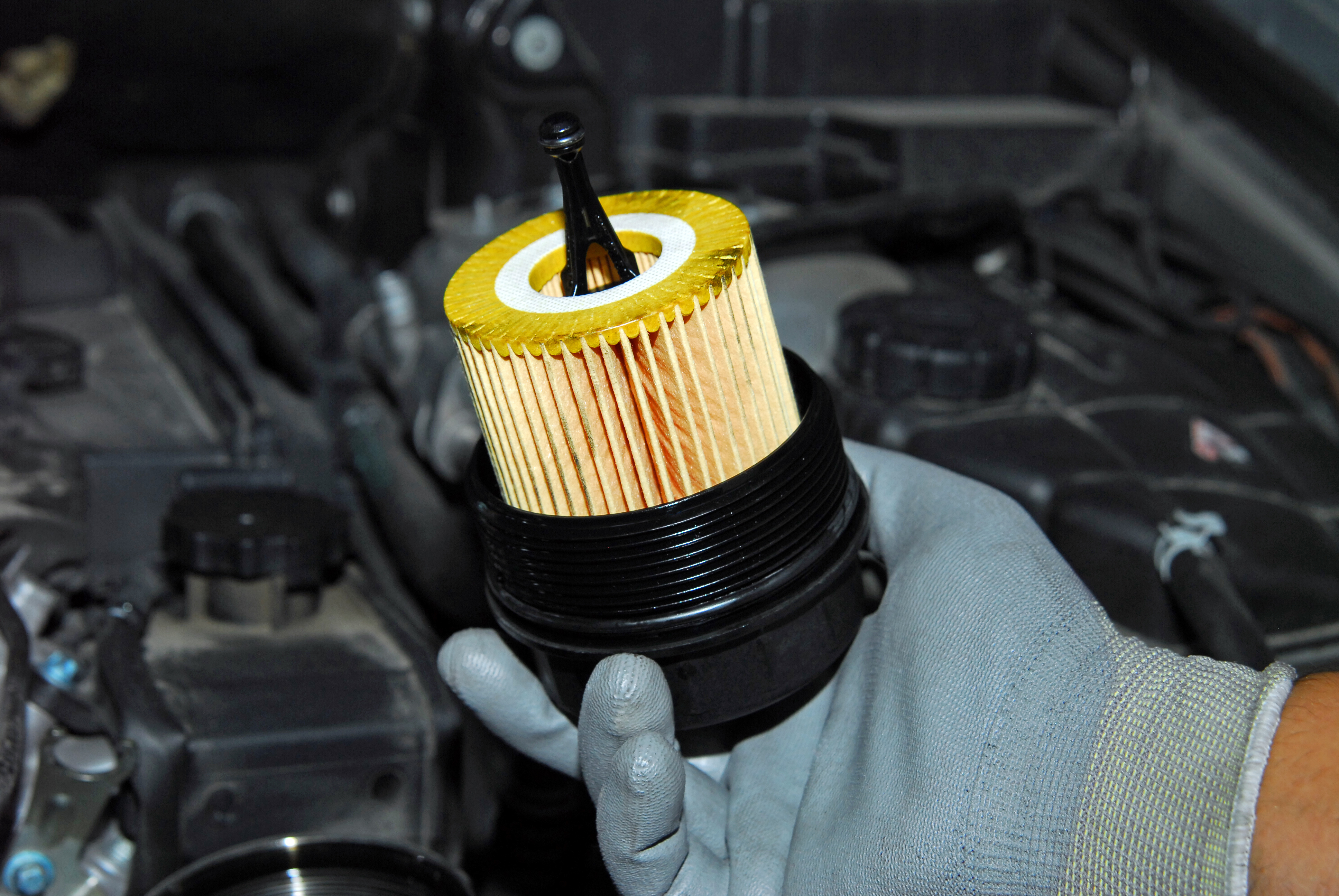
The biggest filter difference between a manual and an automatic is the transmission filter. Most automatics have one; most manuals do not. Your engine, air and cabin filters do the same job in both, but the way automatics tend to be driven can change how quickly those filters work.
Transmission filters: mainly an automatic concern
Automatic gearboxes rely on transmission fluid to change gear, cool internal parts and, in torque converter designs, transfer drive. That fluid picks up fine metal particles and friction material as clutches and bands wear, so many automatics use a transmission filter to keep it clean.
Service intervals vary by gearbox. Several Volkswagen Group DSG units, for example, call for a fluid and filter change every 40,000 miles, while others need fluid only or have no set interval. Always check the manufacturer’s schedule for your exact gearbox.
A manual gearbox normally has no replaceable filter. It runs in a sealed volume of gear oil and the main wear item is the clutch.
A blocked or neglected transmission filter can lead to:
- Delayed, harsh or slipping gear changes
- Overheating transmission fluid
- Warning lights or limp mode
- Expensive mechatronic or gearbox repairs
Oil filters: same job, but driving style matters
Every combustion engine needs an oil filter, whatever the gearbox. However, automatics are popular for town driving and frequent short trips and stop-start traffic count as severe use for engine oil. Moisture and fuel build up because the engine rarely reaches full temperature, which can mean shorter oil and filter change intervals. Our guide on how to tell when to change your oil covers the warning signs and you can find replacements in our oil filter range.
Air filters: traffic and dust load
The engine air filter works the same in manual and automatic cars. What matters is where you drive. Slow-moving traffic and dusty or rural roads load the filter faster and a restricted air filter can hurt economy and performance in either type. Browse our air filters to match your vehicle.
Cabin filters: protecting you in stop-start traffic
If you drive an automatic because you spend a lot of time in congestion, your cabin filter is working harder too. Queuing traffic means more exhaust fumes, brake dust and particles drawn into the cabin. Find out how a cabin air filter works and why changing it on schedule matters.
Hybrids, EVs and Commercial Vehicles
Hybrids are almost always automatic and still need oil, air, cabin and often transmission filtration. Fully electric cars have no engine oil or fuel filter but still need a cabin filter. On commercial vehicles, buses and plant, heavy-duty automatic transmissions use dedicated transmission filters and brands such as Fleetguard produce filters for these applications.
Manual vs Automatic: Which Should You Choose?
There is no single winner in the manual vs automatic debate. An automatic is easier to drive, often just as economical and ready for a hybrid or electric future, but it costs more to buy and maintain and a code 78 licence limits what you can drive. A manual keeps your licence options open and is usually cheaper to buy and repair, but the choice of new models is shrinking every year.
Whichever you choose, regular servicing keeps it running efficiently. That means changing the right filters at the right intervals, including the transmission filter if your automatic has one.
Get the Right Filters for Your Vehicle
Filter Services supplies oil, air, fuel, cabin and heavy-duty filters for cars, vans, HGVs and plant from leading brands, with UK-wide delivery. Buy filters online, search by part number or call our team on 01246 802 822 and we’ll help you find the right filter for your vehicle, manual or automatic.