


Engine oil is one of the hardest working fluids in your vehicle. It lubricates the moving parts of the engine, helps to dissipate heat, removes contaminants and prevents wear.
However, over time, oil breaks down and loses its effectiveness. Running an engine on degraded oil can cause serious damage.
Most manufacturers provide a recommended oil change interval in the vehicle handbook, typically based on mileage or time, whichever comes first.
But intervals are not the only guide. There are several other signs that suggest your oil needs changing sooner rather than later.
1. The Oil Has Turned Dark And Dirty

Fresh engine oil has a translucent, light amber colour. As it circulates through the engine it picks up contaminants, combustion by-products and metallic particles, causing it to darken and eventually turn black.
To check the colour, pull out the dipstick, wipe it clean, reinsert it and pull it out again. Hold the dipstick up to a light source and look at the oil coating. If it is dark brown or black and you cannot see through it, that is a clear indicator that an oil change is overdue. Fresh oil should be clearly visible on the stick with a light, golden tint.
Note that diesel engines tend to darken oil more quickly than petrol engines due to soot from the combustion process, so do not be alarmed if the oil in a diesel vehicle appears darker sooner. The consistency check below is equally important.
2. The Oil Feels Gritty Or Coarse
Colour tells you part of the story. Consistency tells you the rest.
While you have the dipstick out, take a small amount of oil between your thumb and forefinger and rub it together. Fresh oil feels smooth. If the oil feels gritty, grainy or noticeably thick, it is carrying contaminants or has begun to break down chemically.
Contaminant-laden oil is abrasive rather than lubricating. Instead of forming a protective film between engine components, it is effectively carrying particles of grit through the engine with every cycle. At that point the oil is doing more harm than good, and it needs to be changed along with the oil filter.
3. The Oil Level Keeps Dropping Between Top-Ups
All engines consume a small amount of oil during normal operation, but if you are finding that the level drops noticeably between checks even after topping up, that is a sign worth investigating.
Excessive oil consumption can indicate that oil is burning off in the combustion chamber, which is often caused by worn piston rings or valve seals. It can also point to a leak somewhere in the system, such as from a gasket or seal.
In either case, the oil that remains in the engine is working harder than it should, degrading faster and providing less protection. An oil change is the minimum response, but a persistent or significant drop in level warrants a check from a qualified mechanic.
4. The Oil Warning Light Comes On

Most modern vehicles have an oil warning light or an oil life monitoring system that alerts you when a change is due. On older vehicles this is typically a simple pressure-based warning light. On newer vehicles it may be a more sophisticated system that calculates oil life based on driving conditions, temperature cycles and engine load.
If the oil warning light comes on, do not ignore it. The light is usually tied to your manufacturer’s recommended service interval, and in some vehicles it will not reset until an oil change has been carried out.
It is worth noting the distinction between the oil warning light and the low oil pressure light, which is often depicted as an oil can. A low oil pressure warning while driving is more urgent and requires you to stop the vehicle safely and check the oil level before continuing.
5. The Engine Is Noisier Than Usual
A well-lubricated engine runs quietly. As oil ages, its viscosity changes and its ability to form a protective film between moving metal surfaces diminishes. When that happens, components that should be separated by a thin layer of oil begin to make contact, generating noise.
Listen for ticking, tapping or knocking sounds, particularly from the top of the engine. A ticking noise shortly after starting the engine can indicate that oil is not reaching the top of the engine quickly enough, either because the level is low or because the oil has become too thick to circulate freely.
Engine noise that develops gradually alongside high mileage since the last oil change is a strong prompt to check the oil and carry out a change if it is overdue.
6. You Have Covered Significant Mileage Since Your Last Oil Change
Even if none of the above warning signs are present, mileage is a reliable guide. Manufacturer-recommended oil change intervals vary considerably depending on the vehicle, engine type and the grade of oil used.
As a general rule:
- Conventional oil: typically every 5,000 to 7,500 miles or 12 months
- Semi-synthetic oil: typically every 8,000 to 10,000 miles or 12 months
- Full synthetic oil: typically every 10,000 to 15,000 miles or 12 months, though some manufacturers allow longer intervals
Always refer to your vehicle handbook for the manufacturer’s specific recommendation. If you do a lot of short journeys, towing or driving in stop-start traffic, you may need to change your oil more frequently than the standard interval suggests, as these conditions are harder on oil than steady motorway driving.
7. You Notice Blue Or Grey Smoke From The Exhaust
In a previous post, we explained how the colour of your exhaust smoke can tell you a great deal about the condition of your engine. Blue or grey smoke in particular is associated with oil entering the combustion chamber and burning alongside the fuel.
This can happen when piston rings or valve stem seals have worn, allowing oil to pass into areas of the engine where it should not be. The result is that your oil is being consumed and what remains is likely degraded and low in volume.
If you notice blue or grey exhaust smoke, check the oil level immediately and arrange an oil change. Exhaust smoke colour can indicate different underlying issues, and our guide to exhaust smoke colours covers what each one can mean in more detail.
Note that a small amount of white vapour from a cold engine on a cold morning is normal and will clear as the engine warms up. It is blue or grey smoke during normal operation that warrants attention.
How To Check Your Oil Level

If any of the above signs apply, the first step is to check your oil level and condition using the dipstick. Here is how to do it correctly:
- Park on a level surface and switch the engine off. Wait at least five minutes for the oil to drain back down into the sump.
- Open the bonnet and locate the dipstick. It is usually a brightly coloured ring pull, often yellow or orange, positioned near the engine block.
- Pull the dipstick out and wipe it clean with a lint-free cloth. Reinsert it fully, then pull it out again.
- Check where the oil sits on the dipstick. Most dipsticks have a crosshatched area or two marks labelled MIN and MAX. The oil level should sit within this range, and closer to MAX is preferable.
- Check the colour and consistency of the oil on the stick, as described above.
If the level is low, top up with the correct grade of oil for your vehicle as specified in the handbook. Do not overfill, as excess oil can cause its own problems.
Shop Oil Filters From Filter Services
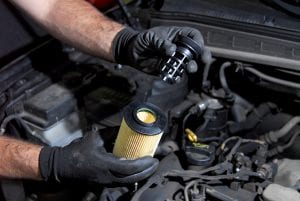
An oil change should always be accompanied by a new oil filter. Over time, the filter becomes clogged with the contaminants it has captured from the oil, and a dirty filter cannot do its job effectively. Fitting a new filter alongside fresh oil ensures the system is working as it should from the moment you start the engine.
Filter Services supplies oil filters from leading brands including Fleetguard, Donaldson, Mann and Hifi, for cars, vans, HGVs and agricultural vehicles.
Whether you know your part number or need help identifying the right filter for your vehicle, our team can help. Call us on 01246 802 822 or browse our oil filter range online.